Description
Aciclovir
Aciclovir doesn’t behave the same way in every cell it encounters. In healthy, uninfected cells, it’s essentially inert — it can enter, but nothing activates it. In cells infected with herpes viruses, the virus’s own enzyme (thymidine kinase) converts aciclovir into its active form, which then blocks viral DNA replication. The selectivity is why the drug is well-tolerated: the mechanism requires the virus to trigger it.
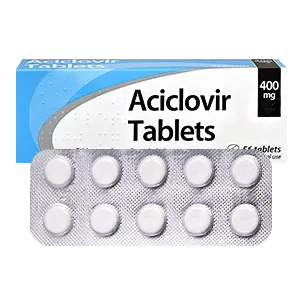
Available in 200 mg, 400 mg, and 800 mg tablets.
What it treats
 Herpes simplex virus type 1 (cold sores, oral herpes, eye infections). Herpes simplex type 2 (genital herpes, both primary episodes and recurrent outbreaks). Varicella zoster virus — shingles in adults, chickenpox in immunocompromised patients. Prevention of CMV and herpes infections in transplant recipients, typically using IV formulations in those settings rather than oral tablets.
Timing matters more than dose
For shingles: treatment needs to begin within 72 hours of the rash appearing to meaningfully affect the course of the illness. Started late, aciclovir’s benefit diminishes significantly. The standard regimen is 800 mg five times daily (every four hours during waking hours) for 7 to 10 days.
For initial genital herpes: 200 mg five times daily for 5 days, or 400 mg three times daily — treatment started within the first few days of symptoms reduces severity and duration of the primary episode.
For cold sores: 200 mg five times daily for 5 days, beginning at the first sign of prodrome (tingling, itching) before visible lesions appear. Once lesions are fully formed, the window for meaningful antiviral effect has passed.
Suppressive therapy
 People with frequent recurrent genital herpes — six or more outbreaks per year — can take aciclovir continuously at lower doses (400 mg twice daily) to suppress recurrences. This approach reduces both outbreak frequency and the risk of transmitting the virus to a partner. Suppressive therapy is typically reviewed after a year to reassess whether continued treatment is needed.
Side effects
Generally well-tolerated at standard oral doses. Nausea, headache, dizziness, and fatigue occur in some patients. Neurological effects — confusion, agitation, tremors — are uncommon at oral doses but more likely at high doses or in patients with impaired renal function. Rash and itching reported occasionally.
Renal impairment and hydration
Aciclovir is eliminated by the kidneys. In patients with reduced kidney function, the drug accumulates and neurological side effects become more likely. Dose reduction is required — the adjustment depends on the degree of impairment. High-dose oral therapy also requires adequate hydration to prevent crystallization in renal tubules.
Elderly patients are particularly at risk for both renal accumulation and CNS effects, even without documented kidney disease.
Pregnancy
Aciclovir is not absolutely contraindicated in pregnancy. It crosses the placenta, and available human data from the Acyclovir Pregnancy Registry (over 1000 first-trimester exposures) have not shown an increased rate of birth defects compared to the general population. The decision to use it during pregnancy is a clinical tradeoff — the risks of disseminated HSV or severe shingles in the mother are real. Most guidelines consider it acceptable when clinically indicated.