Description
What is Priligy?
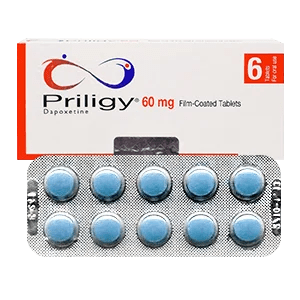
Generic Priligy represents a modern pharmacological intervention specifically developed for premature ejaculation treatment in adult males.
Dapoxetine 30mg/60mg is a selective serotonin reuptake inhibitor formulated for patient who experience lifelong or acquired premature ejaculation. Docotrs prescribe dapoxetine for adult males aged 18-64 years who demonstrate intravaginal ejaculatory latency time (IELT) under two minutes. Clinical trials demonstrate efficacy rates of 65-75% in extending IELT across diverse patient populations.
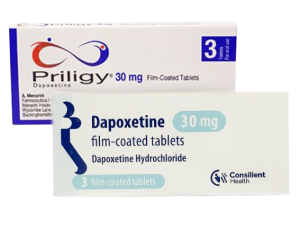 Generic Priligy dapoxetine formulations maintain identical active pharmaceutical ingredients and offer substantial cost savings. Ranbaxy Ltd., Centurion Labs, and Alkem manufacture FDA-approved generic alternatives available through online pharmacies at prices 60-80% lower than brand-name version.
Quality standards remain consistent across reputable generic manufacturers who maintain WHO-GMP certification and FDA inspection compliance. Generic Priligy 30mg undergoes identical dissolution testing as branded versions while offering an alternative low-cost solution for people.
Package reference systems accommodate various quantity requirements including 30-tablet, 60-tablet, and 90-tablet configurations.
⚙️ What Is The Use Of Dapoxetine Tablets?
Treatment of premature ejaculation in adult patients with lifelong or acquired premature ejaculation (PE) represents the primary therapeutic indication for dapoxetine tablets. Generic Priligy 30 mg delays ejaculation time by increasing control over the ejaculatory reflex through targeted serotonin modulation.
Enhanced perceived control over ejaculation reduces anxiety during sexual activity, improves overall sexual confidence and self-esteem. Clinical trials demonstrate that 70-80% of men experience meaningful improvements in ejaculatory control. Sexual satisfaction improvements occur for both patients and their partners according to validated questionnaire assessments.
Priligy Dapoxetine Benefits
Dapoxetine-60 provides multiple therapeutic advantages for men experiencing premature ejaculation concerns. Primary benefit – extension of intravaginal ejaculatory latency time – is backed by clinical trials that show improvements from under 1 minute to 3-4 minutes consistently.
Secondary benefits include improved relationship dynamics and reduced psychological distress associated with sexual performance. Treatment outcomes also demonstrate decreased anxiety levels and enhanced overall quality of life scores. Patients of various age groups report greater confidence during intimate encounters and improved communication with partners regarding sexual health topics.
Rapid onset and short duration of action provide flexibility for treatment scheduling without daily medication commitments. Unlike traditional antidepressants that require continuous dosing, generic dapoxetine-60 allows for on-demand usage 1-3 hours before sexual activity. Such scheduling freedom is particularly beneficial for men with irregular intimate schedules or travel commitments.
Generic Priligy Online Price Structure
| Strength | Pack Size (Quantity) | Price per Pill |
|---|---|---|
| 30 mg | Small Tier (10–60 pcs) | $3.25 – $7.80 |
| 30 mg | Bulk Tier (90–360 pcs) | $1.85 – $2.82 |
| 60 mg | Small Tier (10–60 pcs) | $3.90 – $8.90 |
| 60 mg | Bulk Tier (90–360 pcs) | $2.33 – $3.26 |
| 90 mg | Small Tier (10–60 pcs) | $7.15 – $9.80 |
| 90 mg | Bulk Tier (90–360 pcs) | $3.25 – $6.50 |
*Delivery and Shipping Fees may apply
How Dapoxetine 60mg Works
Dapoxetine increases serotonin activity in the synaptic cleft through selective inhibition of serotonin reuptake transporters. Enhanced serotonin concentration helps delay the ejaculatory reflex by strengthening inhibitory neurotransmission pathways involved in ejaculatory control. Neurons in the spinal ejaculatory center receive amplified serotonin signals that modulate timing mechanisms.
Active metabolites contribute to therapeutic effects and maintain shorter half-life compared to traditional antidepressants used for daily treatment protocols. German Remedies and Dadha Pharma produce formulations with optimized release profiles that maximize therapeutic windows and minimize systemic exposure duration.
Generic Priligy vs Viagra vs Cialis
| Parameter / Attribute | Generic Priligy | Brand Viagra | Brand Cialis |
|---|---|---|---|
| Prescription Reuired? | NO | Yes | Yes |
| Price per Pill | $1.85 – $9.80 | ~$70.00 – $85.00 | ~$35.00 – $50.00 |
| Active Ingredient | Dapoxetine | Sildenafil Citrate | Tadalafil |
| Pharmacological Class | Short-acting SSRI (Serotonin regulator) | PDE5 Inhibitor | PDE5 Inhibitor |
| Primary Indication | Ejaculatory Control | Erectile Rigidity | Sustained Erectile Readiness |
| Duration of Action | 1–3 hours (Peak control window) | 4–6 hours | Up to 36 hours (“The weekend pill”) |
| Impact of Food | Moderate | High (High-fat meals delay absorption) | Minimal |
| Typical Dosage | 30mg or 60mg (On-demand) | 25mg, 50mg, or 100mg (On-demand) | 5mg, 10mg, 20mg (On-demand) or 2.5–5mg (Daily) |
Safety Profile and Tolerability
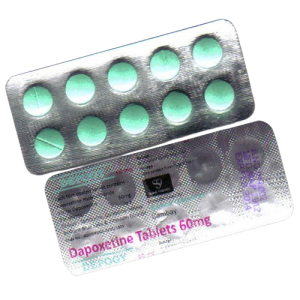 Dapoxetine demonstrates a predictable safety profile and high patient adherence, with 78% to 85% of individuals successfully completing their treatment course. Clinical trials that lasted up for 64 weeks confirm no adverse impact on hepatic or renal function. Adverse reactions are mild to moderate and occur mainly during the initial adaptation phase. They resolve spontaneously on their own within 2–4 hours as the compound clears the system.
- Gastrointestinal Symptoms: Mild nausea (8–22%) and dry mouth (15–20%). Effects diminish substantially with continued use and are reduced when taken with food.
- Neurological Effects: Mild headache (8–17%), transient dizziness (6–14%), and mild fatigue (10–15%) that fade away 1 – 3 hours after pill consumption.
- Sleep Patterns: Temporary alterations, such as mild insomnia or drowsiness, affect 4–8% of users and normalize within the first week of treatment.
Safety Profile and Tolerability
| Clinical Scenario / Risk Factor | Recommended Action & Best Practices |
|---|---|
| Transient Dizziness | At the onset of lightheadedness, sweating, or heart rate shifts, lie down flat or sit with your head between your knees for 15–30 minutes to restore comfort. |
| Driving & Machinery Operation | Postpone operating vehicles or heavy equipment if feeling unwell or lightheaded to ensure maximum personal safety. |
| Grapefruit & Citrus Consumption | Avoid grapefruit juice for 24 hours prior to dosing in order to maintain stable and predictable medication levels. |
| Hydration & Pressure Balance | Drink a full glass of water both before and after administration as it will support stable blood pressure and overall comfort. |
| Temperature & Environment Management | Stay mindful of ambient temperatures with no exposure to heat to prevent unnecessary strain on cardiovascular regulation. |
Safety Profile and Tolerability
➤ Does Priligy Provide a Permanent Solution for Premature Ejaculation?
Generic Priligy offers reliable on-demand control and allows men to achieve consistent performance and delay ejaculation during active treatment. While it manages symptoms during use rather than altering baseline physiology permanently, combination of Priligy with behavioral techniques provides a highly effective and long-term solution to improved sexual health overall.
➤ Can Dapoxetine Be Safely Combined with Alcohol?
To maximize therapeutic benefits alcohol is not recommended around the time of dosing. Alcohol can exacerbate central nervous system effects – such as drowsiness or transient lightheadedness – and impair coordination. Alcohol-free regimen during treatment ensures optimal cognitive clarity, stable blood pressure, and predictable medication efficacy.
➤ Is Priligy Suitable for Every Man Experiencing Premature Ejaculation?
Priligy-60 is an ideal choice for the vast majority of adult patients who seek enhanced ejaculatory control and performance confidence. A brief medical evaluation can screen out specific contraindications though, such as severe cardiac conditions, major hepatic impairment, or interactions with MAO inhibitors.