

Description
Diflucan (fluconazole)
For most people reading this, the relevant fact is simple: vaginal candidiasis, one 150 mg tablet, and it’s done. That convenience — a single oral dose clearing an infection that topical creams sometimes take a week to resolve — is why fluconazole became the standard treatment for uncomplicated thrush. The drug reaches fungal infections systemically, which topical treatments can’t always match.
Available in 50 mg, 100 mg, 150 mg, 200 mg, and 400 mg tablets.
What it treats
Vaginal and penile candidiasis caused by Candida albicans. Oral and pharyngeal candidiasis (thrush in the mouth and throat). Skin fungal infections including athlete’s foot, ringworm, jock itch, and pityriasis versicolor. For genital candidiasis — the most common use — a single 150 mg dose is the standard regimen.
Oral and pharyngeal infections require longer treatment: 50–100 mg daily for 7 to 14 days. Skin infections typically run 2 to 4 weeks at 50 mg daily, extending to 6 weeks for athlete’s foot.
How it works
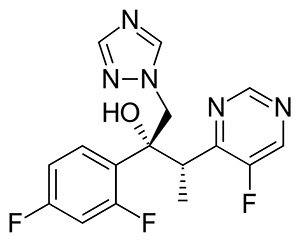 Fluconazole targets ergosterol, the structural equivalent of cholesterol in fungal cell membranes. It blocks an enzyme called 14α-demethylase that fungi need to produce ergosterol. Without it, the membrane breaks down and the cell dies. Human cells use cholesterol instead of ergosterol, which is why the drug affects fungi without directly harming human tissue.
After a single oral dose, fluconazole is almost completely absorbed within two hours. The half-life is approximately 30 hours in adults with normal kidney function — which means after a single 150 mg tablet, the drug remains active in your system for several days. That’s the reason one dose is often sufficient.
Drug interactions — this matters more than most antifungals
Fluconazole inhibits two liver enzymes — CYP2C9 and CYP3A4 — that are responsible for metabolizing a large number of commonly prescribed drugs. When those enzymes are inhibited, the drugs they normally break down accumulate to higher-than-intended levels.
 The clinical consequences range from manageable to serious. Warfarin levels rise significantly, increasing bleeding risk. Benzodiazepines stay active longer, extending sedation. Some heart rhythm medications (including pimozide and quinidine) accumulate to dangerous concentrations — concurrent use is contraindicated. Certain antihistamines (astemizole, terfenadine) reach levels that can cause potentially fatal cardiac arrhythmia — also contraindicated.
Tell your prescriber about every other medication you take before starting fluconazole, even for a single-dose course. The interaction risk doesn’t disappear just because treatment is brief.
Pregnancy and breastfeeding
Fluconazole is not recommended during pregnancy. Animal studies showed teratogenic effects at high doses, and some human observational data raised concerns about cardiac defects with first-trimester exposure. The single 150 mg dose for vaginal candidiasis presents lower risk than longer courses, but the current guidance is to use topical azole treatments instead during pregnancy.
Fluconazole passes into breast milk at concentrations similar to plasma. Most guidelines recommend avoiding it while breastfeeding, or interrupting breastfeeding during treatment.
Side effects
Nausea, abdominal pain, diarrhea, flatulence, and headache are the most common. Rash occurs in some patients — if accompanied by fever or mouth/throat involvement, stop and get evaluated, as these can indicate a serious cutaneous reaction.
Liver enzyme elevation occurs, particularly with longer courses or in patients on other hepatotoxic medications. Symptoms of liver problems — persistent nausea, jaundice, upper right abdominal pain — warrant prompt evaluation.
Renal impairment
Fluconazole is eliminated primarily unchanged through the kidneys. Significant renal impairment prolongs the half-life and increases drug exposure; dose reduction is necessary for patients with creatinine clearance below 50 mL/min on extended regimens. A single dose for vaginal candidiasis typically doesn’t require adjustment.