
Description
Ventolin (salbutamol)
Salbutamol is a reliever — it opens airways quickly when they tighten, and that effect lasts about four hours. It doesn’t reduce underlying inflammation, doesn’t prevent future episodes, and doesn’t treat the reason your airways are reactive. If you’re using it more than twice a week for symptoms, that’s a signal that asthma control needs attention, not just the inhaler.
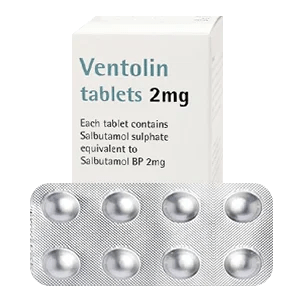
Available as oral tablets in 2 mg and 4 mg doses. The tablet form has a slower onset than inhaled salbutamol and produces more systemic effects; the inhaled route is preferred for acute bronchospasm in most clinical situations.
How it works
Salbutamol binds selectively to beta-2 adrenergic receptors in the smooth muscle of the bronchial walls. The binding triggers a cascade that raises cyclic AMP, which causes the muscle to relax. Airways widen, resistance drops, breathing becomes easier. Onset with oral tablets is slower than with inhalation — typically 30 minutes rather than minutes. Duration is about four hours in both cases.
Indications
Bronchial asthma. Obstructive airway disease with reversible bronchoconstriction — including chronic obstructive bronchitis and emphysema with asthmatic components. Approved in adults, adolescents, and children over 4. The emphasis is on reversible obstruction: conditions where the narrowing responds to a bronchodilator. Irreversible obstruction, as in severe COPD, responds less predictably.
Who should not take salbutamol
People with hypersensitivity to salbutamol or any component of the formulation. With caution in: coronary heart disease, arrhythmias, high blood pressure, hyperthyroidism, glaucoma, diabetes, and prostatic hypertrophy — salbutamol’s beta-stimulating effects can exacerbate each of these.
Non-selective beta-blockers (propranolol, atenolol) directly antagonize salbutamol’s bronchodilating effect. Using them together significantly reduces Ventolin’s efficacy and can precipitate severe bronchospasm in asthma patients. If you’re prescribed a beta-blocker, make sure your prescriber knows you’re using salbutamol.
Side effects
 Tremor — fine muscle shaking, most noticeable in the hands — is the most common at therapeutic doses. Palpitations, mild tachycardia, and headache occur in some patients. These are more pronounced with oral tablets than with the inhaled form because systemic drug levels are higher.
Oral candidiasis (thrush) can develop with regular inhaler use; rinsing the mouth with water after each dose reduces this risk. The same recommendation applies to oral tablet use, though the mechanism differs.
Paradoxical bronchospasm — worsening airway narrowing immediately after use — is rare but documented. If breathing becomes harder rather than easier after taking salbutamol, stop using it and seek emergency care.
Pregnancy
Salbutamol during pregnancy is not preferred but is used when the benefit of treating bronchospasm outweighs the risk. Uncontrolled asthma carries more risk to the fetus than the drug. Decisions about use during pregnancy should be made with a prescriber who knows the full clinical picture.
Diabetes and glucose
Salbutamol raises blood glucose through beta-adrenergic effects. In diabetic patients, this effect is clinically meaningful at higher doses. Blood glucose should be monitored more closely during periods of increased salbutamol use.