
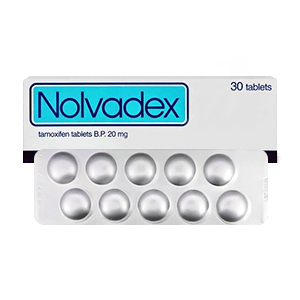
Description
Nolvadex (tamoxifen)
Nolvadex contains tamoxifen, a selective estrogen receptor modulator (SERM) with a more complex pharmacological profile than a simple estrogen blocker. It acts as an estrogen antagonist in breast tissue — which is the basis for its use in breast cancer — but as a partial agonist in bone and uterine tissue. That dual character explains both its clinical utility and its serious long-term risks. It’s available in 10 mg and 20 mg tablets, with uses spanning breast cancer treatment, reduction of breast cancer incidence in high-risk women, male gynecomastia, and off-label fertility applications.
Dosing
For breast cancer: standard dosing is 20 mg daily, typically continued for 5 to 10 years depending on the treatment protocol. For gynecomastia: 20 mg daily initially, reducible to 10 mg once symptoms improve. Doses can be taken as a single daily dose or split; taking with meals reduces nausea. Do not crush or chew tablets.
Endometrial cancer and thromboembolism
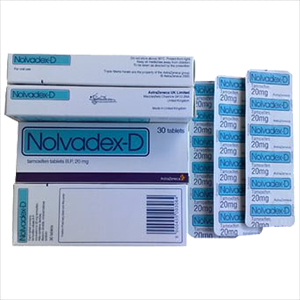 Tamoxifen carries an FDA black box warning for two serious risks: uterine malignancies (endometrial cancer and uterine sarcoma) and thromboembolic events including deep vein thrombosis and pulmonary embolism. These are not theoretical risks — they are documented in clinical trial populations. Women taking tamoxifen should have regular gynecological examinations and report any abnormal vaginal bleeding immediately. Any history of DVT, PE, or known hypercoagulable states requires careful prescriber assessment before starting tamoxifen.
Contraindications
History of deep vein thrombosis or pulmonary embolism. Pregnancy — tamoxifen causes fetal harm; effective contraception is required during treatment and for several months after stopping. Breastfeeding. Concurrent use with coumarin anticoagulants (including warfarin) is a significant interaction — tamoxifen markedly potentiates anticoagulant effect and requires close INR monitoring and dose adjustment. Hypersensitivity to tamoxifen.
CYP2D6 interactions and efficacy
Tamoxifen is converted to its most active metabolite, endoxifen, by CYP2D6. Strong CYP2D6 inhibitors — paroxetine, fluoxetine, bupropion — substantially reduce endoxifen levels and may reduce tamoxifen’s anti-tumor efficacy. This interaction is clinically significant for breast cancer patients who are also on SSRIs for depression or hot flush management. Other antidepressants with less CYP2D6 inhibition (venlafaxine, citalopram) are preferred in this setting.
Monitoring
Regular blood tests, gynecological examinations, and eye examinations are recommended during long-term tamoxifen use. Cataracts and retinal changes have been associated with tamoxifen, particularly with prolonged therapy. Liver function should be monitored, as liver steatosis and rare cases of more significant hepatic effects have been reported.
Side effects
Hot flushes are the most common and are expected in most women. Vaginal bleeding or discharge, leg cramps, fluid retention, dizziness, and rash also occur. Ovarian cysts may develop or enlarge in pre-menopausal women. Serious thromboembolic events and endometrial changes require immediate evaluation if symptoms develop — leg swelling or pain, chest pain, sudden breathlessness, or abnormal vaginal bleeding.